
 Login
Login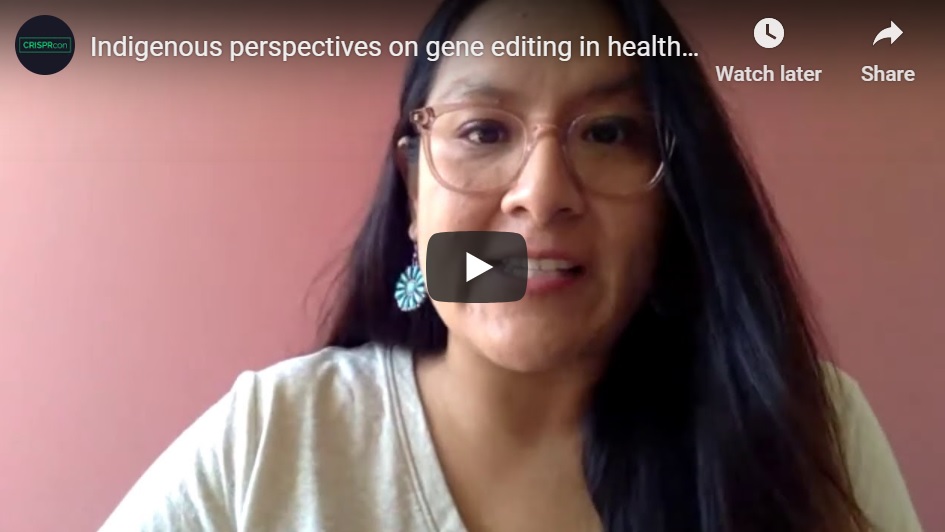
Indigenous Perspectives on Gene Editing
Continuing its opening theme on science and societal narratives, CRISPRcon 2020’s second panel on Sep. 3 explored Indigenous viewpoints from a variety of geographies —a viewpoint that has been marginalized and excluded throughout history, not just in the conversation around technology and gene editing.
“We have to acknowledge that indigenous peoples and communities are still widely not at the point of engaging or utilizing this technology,” said Krystal Tsosie, co-founder of Native BioData Consortium, who moderated the discussion. “Listen carefully, though. It’s not coming from a point of being anti-science, but rather anti-exploitation.”
“One of the best ways for the tribes to protect themselves and their community is through robust tribal code drafting because tribes have varying degrees civil and criminal jurisdiction over their Indian Country,“ said McCool.
“Values affected by gene editing could be enhanced or diminished depending on its use. It then became a question about not whether the technology itself was good or bad but whether its use was good or bad,” said Hudson.
“I actually see [the modern ‘Green Revolution’ form of corn] as an example of the arrogance and the hyperbole of the settler colonial gaze on maiz,” said Peña.
“The point is many of these narratives are real. They are what I would call A-plus stories, and some of them are F-minus stories because they have no evidence supporting them mechanistically. And it’s hard to tease that apart when they are published in major journals without the consent or partnership of the communities that the information was actually derived from,” said Fox.