



 Login
Login
For the past year, Keystone Policy Center has celebrated a milestone: 50 years of bringing people together to solve complex problems. Throughout this anniversary series, we’ve reflected on our origins, our methods, and the many leaders who shaped our work.
This final installment shifts the lens. Instead of focusing on the projects Keystone led, we focus on what happened after. Because perhaps the most profound part of Keystone’s legacy isn’t always found in the facilitated meetings, the high-stakes dialogues, or even the agreements reached. It’s found in the long-term impact that continues once the formal work is done.
This is what we call the Invisible Reach of Keystone. It is the enduring influence of relationships, trust, and collaborative processes that carry forward long after Keystone steps away.
Early Roots: The Keystone Science School

One of the clearest early examples of this legacy is the Keystone Science School. Founded in 1976, the school emerged from a simple but powerful idea: that science is not just a subject, but a shared language that can help communities make better decisions. What began as an experiment in experiential learning became an established institution, and eventually an independent nonprofit, that continues to shape young leaders, educators, and communities today.
Bob Craig’s original intent for the Keystone Science School was to serve the children of those who traveled to Keystone to participate in dialogues and projects, offering them the same spirit of inquiry and hands-on learning that defined the work happening around the conference table. Over time, that focus expanded to include any children whose families wanted them to participate in camps and programs that sought a deeper, experiential approach to science education.
From Dialogue to Institution: Advancing HIV Research
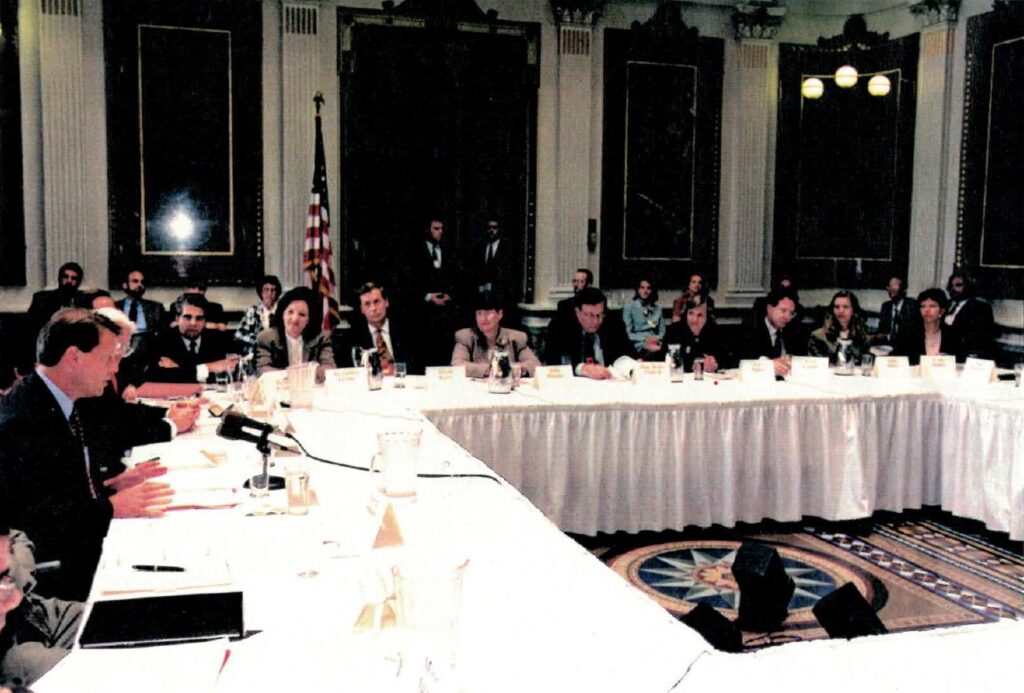
Decades later, Keystone applied its collaborative model to an entirely different challenge: the evolving HIV/AIDS crisis. The Keystone National Policy Dialogue on HIV brought researchers, government agencies, clinicians, patient advocates, and industry into the same room to navigate an incredibly complex landscape of scientific uncertainty, urgent public health needs, and community expectations.
What emerged was not only a set of shared strategies, but a foundation of trust strong enough to support a long-term, independent organization. The work of that dialogue ultimately led to the creation of the Forum for Collaborative HIV Research, and later, the Forum for Collaborative Research, which continues to bridge science, policy, and community perspectives at the national level today.
The Forum stands as a powerful example of what happens when dialogue doesn’t just end with a report but becomes the starting point of something larger.
Building a New Market: The Green Products Roundtable
By the late 2000s, new questions were emerging about sustainability, product claims, and responsible purchasing. In response, Keystone convened the Green Products Roundtable, a diverse group of companies, NGOs, government agencies, academics, and retail leaders facing a rapidly shifting marketplace of environmental expectations.
This group quickly recognized that defining “green products” was only part of the challenge. Organizations needed a systemic way to make sustainable purchasing decisions, balancing environmental, economic, and social factors across entire supply chains.
The Roundtable’s work expanded into a comprehensive systems-based approach that eventually became the basis for a new organization: the Sustainable Purchasing Leadership Council (SPLC). Today, SPLC serves as a national hub for responsible procurement, offering guidance, tools, and community for hundreds of institutions across the country.
It began with a Keystone dialogue. It continues as an independent force for change.
Transforming Agriculture: Field to Market
Another example of Keystone’s long-range impact can be found in the agricultural sector. What started as a small, cross-sector conversation facilitated by Keystone grew into Field to Market, now one of the most influential collaborations in sustainable agriculture.
The initiative brought together farmers, agribusinesses, conservation groups, researchers, and retailers—partners who often operated in isolation—to address sustainability challenges across entire commodity systems. Over time, its membership grew exponentially, its programs expanded, and it evolved into a thriving independent organization with national reach.
Field to Market’s success demonstrates a familiar pattern: Keystone creates the conditions, the process, and the trust—and then the work grows beyond us.
Empowering Communities: Growing Ute Futures and KCA
Some of Keystone’s most meaningful impact comes from work that begins at the local level. Through the Growing Ute Futures Initiative, Keystone supported the Ute Mountain Ute Tribe in imagining and building new pathways for youth opportunity, education, and leadership.
Out of that effort came the Kwiyagat Community Academy (KCA), Colorado’s first tribally authorized charter school. Guided by Tribal leadership and supported by Keystone, KCA represents a long-term investment in the Tribe’s future leaders. The school is more than a building; it is a foundation for strengthening identity, academic opportunity, and community self-determination.
KCA’s continued growth, both in grade levels and student enrollment, is a testament to what happens when a community is given the tools and support to build something that is truly its own.
The Power of Work That Endures
Across these examples, and many more examples not mentioned, one truth is unmistakable: Keystone’s greatest impact is not measured in reports, recommendations, or workshops. It is measured in what happens long after the dialogue ends.
It is measured in the organizations that flourish independently; in the leaders who emerge; in the communities that strengthen their own pathways; and in the continued momentum that extends far beyond our presence.
This year has also highlighted another reality. When stakeholders remain committed to the solutions they shape together, long-lasting change becomes possible. But when consensus-based solutions are ignored or abandoned, communities often find themselves right back where they started, with renewed contention, stalled progress, and the need to begin again.
These moments reinforce why Keystone’s work remains not only relevant, but essential.
As we close this anniversary series, we look forward with optimism. The challenges will change, but the core belief that guides our work remains: people can solve big problems when given the space and structure to do so together.
Keystone’s next fifty years will be built on the same foundation as the last—collaboration, trust, science, and the courage to bring diverse voices into the same room. And as new ideas, new leaders, and new initiatives continue to emerge, many of them will grow into legacies of their own.
The Invisible Hand of Keystone will continue. And we invite you to be part of what comes next.
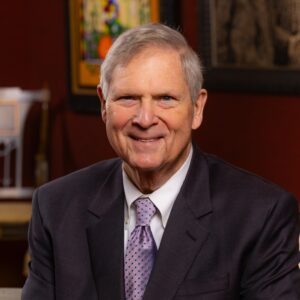 Effective March 1, 2025, Thomas J. Vilsack, former United States Secretary of Agriculture and Governor of Iowa, became the first Chief Executive Officer for the World Food Prize Foundation. In this new role, Governor Vilsack is focusing on expanding the Foundation’s global network, and will further position the Foundation as a leader in addressing global food and nutrition insecurity, continuing his lifetime of public service.
 Shelby Coffey III is a distinguished journalist, media executive, and thought leader whose career has helped shape the landscape of American news and public discourse. Over several decades, Coffey has held some of the most influential roles in journalism, including serving as editor of the Los Angeles Times, executive vice president of ABC News, and deputy managing editor of The Washington Post. His editorial leadership extended to key roles as president of CNN Financial News, editor of the Dallas Times Herald, and U.S. News & World Report.
 Jerry Steiner has spent 40 years involved in agriculture following growing up on a Wisconsin dairy farm. He began his career with Monsanto, in multiple business leadership roles. From 2003-2013 he served as a member of the Executive team, as the company’s Executive Vice President of Sustainability and Corporate Affairs. He led the company’s global Government, Public and Industry Affairs teams across the 70 countries where Monsanto conducts business. This experience got Jerry connected to the Keystones centers work in agriculture. Key among his responsibilities were shaping the company’s public policy and building partnerships aimed at helping farmers around the world produce more food, while conserving valuable resources like water and energy. Two unique partnership that developed under his leadership were drought tolerant corn with 5 African countries, CIMMYT and the Gates foundation, and a building a sustainable business model in Brazil with the value chain leading to significant multi-company investment and soybean varieties that can protected themselves.
 Jennifer Morris is the Chief Executive Officer of The Nature Conservancy, leading a team of nearly 6,000 staff working in more than 80 countries and territories tackling the dual crises of the
 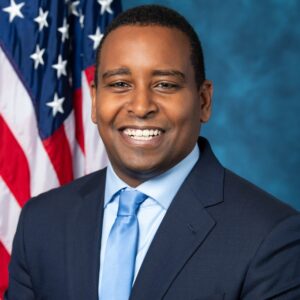 Congressman Joe Neguse represents Colorado’s 2nd District in the U.S. House of Representatives. He was elected to his first term in November 2018, becoming the first Black Member of Congress in Colorado history. In December 2022, Rep. Neguse was elected by his colleagues to serve as Chair of the Democratic Policy and Communications Committee (DPCC), becoming the first Coloradan to serve in a senior elected leadership role in the House in over 85 years. He serves on the Natural Resources and Judiciary Committees, and was also appointed by House Minority Leader Hakeem Jeffries to serve as one of four Democrats on the prestigious Rules Committee. Rep. Neguse serves as Ranking Member on the House Subcommittee on Federal Lands, which he previously Chaired in the 117th Congress.
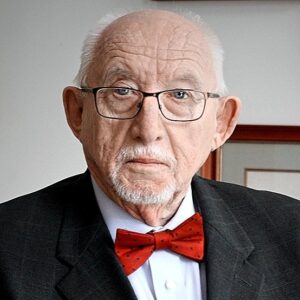 Llewellyn King was born in Southern Rhodesia, now Zimbabwe. He went into journalism as soon as he turned 16, stringing for Time magazine and United Press in Africa.
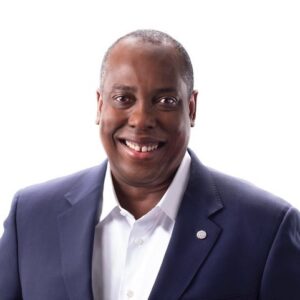 Steven Williams is the Chief Executive Officer of PepsiCo North America, overseeing a more than $48 billion business that spans PepsiCo’s Foods and Beverage operating units. His leadership encompasses more than 125,000 associates and over 900 locations across the U.S. and Canada. Steven joined PepsiCo in 2001 as part of PepsiCo’s acquisition of the Quaker Oats Company, which he joined in 1997, and has held leadership positions of increased responsibility since.