



 Login
Login

On November 30, 2021, Keystone Policy Center convened a workshop of diverse experts on public health, food, and environment systems to discuss the role of genomic innovation in interdisciplinary, “one health” approaches to global challenges. The workshop was hosted in partnership with New York University and with funding from Corteva Agriscience. It piloted a new, dialogue-based format as part of Keystone’s ongoing CRISPRcon series exploring science, society, and the future of gene editing.
“One health” approaches to global challenges acknowledge the interconnections among the health of animals, people, and the environment and take a collaborative, cross-sector, and multi-discipline approach to solutions. In three sessions on environmental health, agriculture and health, and human health—each inclusive of publicly-available flash talks and dialogue—workshop participants discussed opportunities for genomic innovation in addressing current crises and mitigating future ones, including the climate crisis, global food insecurity, and the next pandemic. Conversations tackled a range of technical, policy, social, and ethical considerations for prioritization, collaboration, and governance of technology-compatible or technology-enabled solutions.
Key takeaways from the workshop are presented below.
Incorporation of genomic technologies within system-based approaches
This discussion addressed the importance of seeing genomic technologies as one piece of a much broader systems-based framework for addressing global challenges like climate, food insecurity, and pandemics. Key points included:
- Wherever possible, new tools and technologies should be advanced in a way that is complementary with traditional knowledge or approaches. Local innovation based on traditional knowledge offers significant benefits for resilience and productivity, and genomic technology should complement or support local innovation, not replace it.
- Outcome-driven approaches driven by existing priorities, values, and sociocultural context can inform the right balance of targeted and broad-spectrum approaches, rather than framing all problems through the lens of one particular technology.
- Broad-spectrum solutions can more efficiently harness innovation funding and attention in service of a number of challenges (i.e., technology that enables diagnosis or treatment of multiple diseases or can be utilized across different geographies or crops). Still, targeted approaches are often essential for ensuring that technology is appropriate to the technical or social context in which it is being used.
- Beyond developing genomic technologies to address specific challenges or emerging issues, genomic innovation should be used to address basic, ongoing needs like hunger.
Genomic technologies as interdisciplinary monitoring and diagnostic tools for one health
Conversations emphasized that genomic technologies are advanced, multi-purpose tools that can support interdisciplinary one health efforts, including through their use as diagnostic research tools. For example, these tools can support better understanding of:
- Emergent diseases in ecosystems and/or agricultural systems that could impact environmental, agricultural, and/or human health, for instance through the transmission of zoonotic, vector-borne, or food-borne disease.
- Complex human, agricultural, and ecological microbiome systems in support of carbon sequestration and disease monitoring and intervention.
- Interactions within crop systems to address climate impacts, disease, and pest resilience, nutrition, shelf-life, and productivity and food security.
- Broad systems such as the above to support development of targeted and context specific solutions.
Governance principles for ethical innovation and equitable outcomes
Workshop participants also discussed the role of regulation, policy and bioethics in the development and use of genomic technologies, including when it comes to achieving equitable outcomes. Key takeaways from this discussion included:
- Regulation is both a necessity to ensure safety and biosecurity and a barrier to technology adoption, for instance in cases where regulatory burden discourages innovation.
- Beyond regulation, governance is needed to ensure ethical practices, especially with respect to areas of moral and ethical ambiguity, such as germline editing, gene drives, and population modification (compared to technologies that can be controlled or confined). Governance should be more concerned with reflecting values and intended outcomes than with determining the essential acceptability of a specific technology.
- Governance must carefully consider access to technology and benefit sharing, accounting for power imbalances and inequities that can result from centralization and/or de-centralization of data and knowledge. Governance should also account for challenges with properly valuing and protecting data, knowledge, and intellectual property (especially for historically exploited groups) in open access structures.
- Opportunities to fairly distribute benefits could include managed access, data storage and collection models, and greater actualization of the Nagoya Protocol. Artificial intelligence and blockchain technologies may ensure more equitable handling of data and knowledge, especially for Indigenous populations.
- Policy should reconsider incentive structures and value traditional and Indigenous knowledge, biodiversity, and “first movers” who in public health contexts may be penalized and discriminated against for sounding the alarm about an emerging issue rather than rewarded and supported for early identification.
Opportunities and barriers for interdisciplinary collaboration
Participants emphasized the importance of interdisciplinary, multisector, and multilateral dialogue and collaboration when it comes to addressing global challenges, but also identified barriers inhibiting this approach:
- Participants celebrated the CRISPRcon workshop as a rare example of cross-sector and cross-cultural dialogue on genomic innovation, and called for more forums of this kind to support more thorough understanding of interconnected challenges as well as relationship building to identify opportunities for collaboration.
- Institutional and sectoral silos present a practical challenge for multidisciplinary collaboration. Participants called for training, capacity building, infrastructure, and funding to foster effective multidisciplinary collaboration within universities and the public and private sectors.
- Participants also acknowledged the broader need for public trust in science, which can be fostered by more robust education on science and genomic innovation; stakeholder engagement throughout the life of a project (inclusive of capacity building and funding to support the public in this engagement, especially for historically disinvested and/or the most impacted communities and groups); and the opportunity for two-way influence such that public feedback, sociocultural narratives, and local priorities and values inform technology-enabled approaches.
 Effective March 1, 2025, Thomas J. Vilsack, former United States Secretary of Agriculture and Governor of Iowa, became the first Chief Executive Officer for the World Food Prize Foundation. In this new role, Governor Vilsack is focusing on expanding the Foundation’s global network, and will further position the Foundation as a leader in addressing global food and nutrition insecurity, continuing his lifetime of public service.
 Shelby Coffey III is a distinguished journalist, media executive, and thought leader whose career has helped shape the landscape of American news and public discourse. Over several decades, Coffey has held some of the most influential roles in journalism, including serving as editor of the Los Angeles Times, executive vice president of ABC News, and deputy managing editor of The Washington Post. His editorial leadership extended to key roles as president of CNN Financial News, editor of the Dallas Times Herald, and U.S. News & World Report.
 Jerry Steiner has spent 40 years involved in agriculture following growing up on a Wisconsin dairy farm. He began his career with Monsanto, in multiple business leadership roles. From 2003-2013 he served as a member of the Executive team, as the company’s Executive Vice President of Sustainability and Corporate Affairs. He led the company’s global Government, Public and Industry Affairs teams across the 70 countries where Monsanto conducts business. This experience got Jerry connected to the Keystones centers work in agriculture. Key among his responsibilities were shaping the company’s public policy and building partnerships aimed at helping farmers around the world produce more food, while conserving valuable resources like water and energy. Two unique partnership that developed under his leadership were drought tolerant corn with 5 African countries, CIMMYT and the Gates foundation, and a building a sustainable business model in Brazil with the value chain leading to significant multi-company investment and soybean varieties that can protected themselves.
 Jennifer Morris is the Chief Executive Officer of The Nature Conservancy, leading a team of nearly 6,000 staff working in more than 80 countries and territories tackling the dual crises of the
 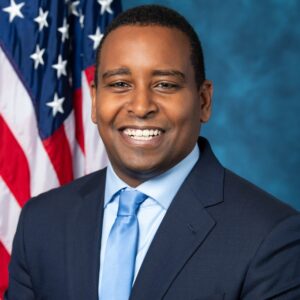 Congressman Joe Neguse represents Colorado’s 2nd District in the U.S. House of Representatives. He was elected to his first term in November 2018, becoming the first Black Member of Congress in Colorado history. In December 2022, Rep. Neguse was elected by his colleagues to serve as Chair of the Democratic Policy and Communications Committee (DPCC), becoming the first Coloradan to serve in a senior elected leadership role in the House in over 85 years. He serves on the Natural Resources and Judiciary Committees, and was also appointed by House Minority Leader Hakeem Jeffries to serve as one of four Democrats on the prestigious Rules Committee. Rep. Neguse serves as Ranking Member on the House Subcommittee on Federal Lands, which he previously Chaired in the 117th Congress.
 Llewellyn King was born in Southern Rhodesia, now Zimbabwe. He went into journalism as soon as he turned 16, stringing for Time magazine and United Press in Africa.
 Steven Williams is the Chief Executive Officer of PepsiCo North America, overseeing a more than $48 billion business that spans PepsiCo’s Foods and Beverage operating units. His leadership encompasses more than 125,000 associates and over 900 locations across the U.S. and Canada. Steven joined PepsiCo in 2001 as part of PepsiCo’s acquisition of the Quaker Oats Company, which he joined in 1997, and has held leadership positions of increased responsibility since.